Case study
DHL IoT: Access Control & Business Units
The governance layer of the DHL IoT platform. Role-based access control is where the access model is configured: roles, the responsibilities they hold, the sub-functionalities within them, and the CRUD operations they permit, scoped to either the platform or a specific application. Business units model DHL's large, layered organization, the hierarchy that every user, device, and application is ultimately scoped to.
4
Roles: Platform Admin, Use Case Owner, DHL & External Users6
Responsibilities mapped across the platformCRUD
Read, create, edit, and delete per responsibility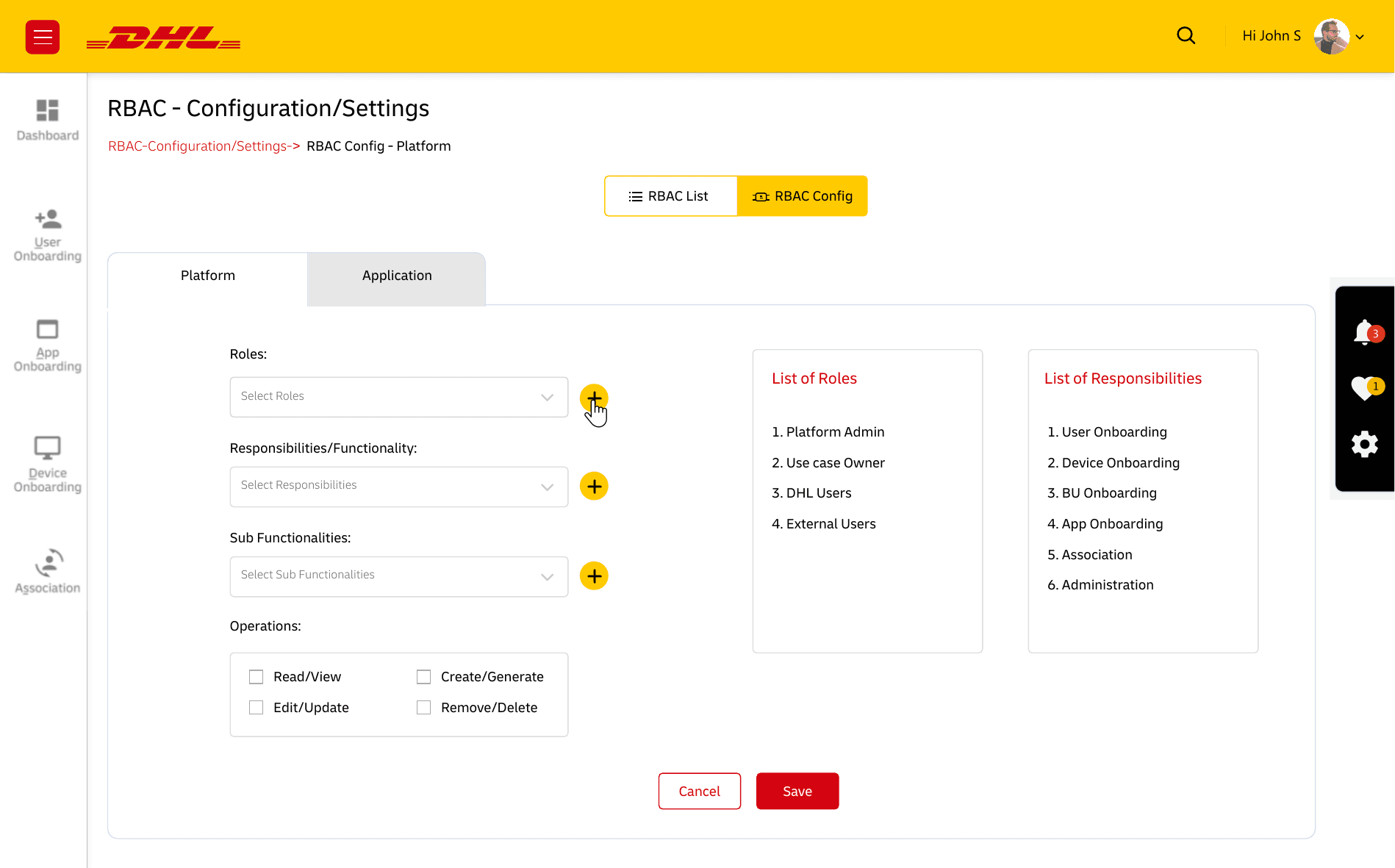
- Enterprise UX
- Governance
- Information Architecture
- Interaction Design
Everything on the platform is governed by who you are and what you are allowed to do, and by where you sit in DHL's organization. The RBAC module is where the access model is configured, and the business-units module models the hierarchy it is scoped to.
- 1IA. Platform and Application tabs scope every rule, so access is set for the platform or a specific app.
- 2Prototype. Each selector pairs with a plus button, so a missing role or responsibility is added in place.
- 3IA. Sub-functionalities add a third level, refining a responsibility before operations are granted.
- 4Components. Operations are explicit CRUD checkboxes, read, create, edit, delete, never implied by a role name.
- 5Research. The four roles stay listed beside the form, so admins see the catalog while composing access.
- 6IA. Six responsibilities map onto platform modules, from user onboarding to administration.
The challenge
DHL is a large, layered organization, and the platform has to mirror that. As users and applications grow, it gets harder to keep control of who can do what.
- Access has to be set per platform and per application
- The person configuring access must be able to see what they are granting
- Every user, device, and application has to be scoped to DHL's real structure
Governance is a design problem. An access model is only safe if the person configuring it can actually see what they are granting.
Outcome
- A legible, composable access model that let DHL grow the platform's users and applications without losing control of who could do what
- An organizational backbone that let every other module, users, devices, applications, be scoped correctly to DHL's real structure
Continue reading
3 sections · 6 screens are protected. Enter the password, or request access.