04 · Prepared for the Meta hiring team
WSJ+: Subscriber Onboarding Design Sprint
A design sprint that turns a brand-new WSJ subscription into an engaged, personalized relationship. The three-step onboarding gets readers into the app, learns their interests and professional profile, and makes WSJ's 50+ newsletters genuinely discoverable through recommendations. Designed responsively across web and app in parallel, it earns engagement instead of demanding data, never blocking the path forward.
Why this piece is in my application
A three-step activation journey that turns a new subscription into a personalized relationship across web and app, using interests and recommendations without blocking progress.
3
step onboarding: app, interests, newsletters
50+
newsletters made discoverable and recommended
2
surfaces designed in parallel: web and app
The moment right after someone subscribes to The Wall Street Journal is where engagement is won or lost. In a focused design sprint I designed the onboarding that uses that moment well: instead of dropping a new subscriber onto the homepage, it walks them through a short, considered flow that turns a transaction into a personalized relationship.
The challenge
A new subscriber arrives motivated but un-oriented. The flow had to do three jobs without ever feeling like a data-collection wall: pull readers into the WSJ app where engagement is highest, learn enough about each reader to recommend the right coverage, and make WSJ's deep catalog of newsletters genuinely discoverable. It had to work as one coherent system across both desktop web and mobile.
- Drive app adoption - the highest-retention surface - right at activation
- Capture interests and a professional profile to power recommendations
- Surface 50+ industry newsletters without overwhelming the reader
The full flow continues behind the gate - all three steps across desktop and mobile, and how each one earns the reader's attention before asking for anything.
Step 1 - Get the most out of the subscription
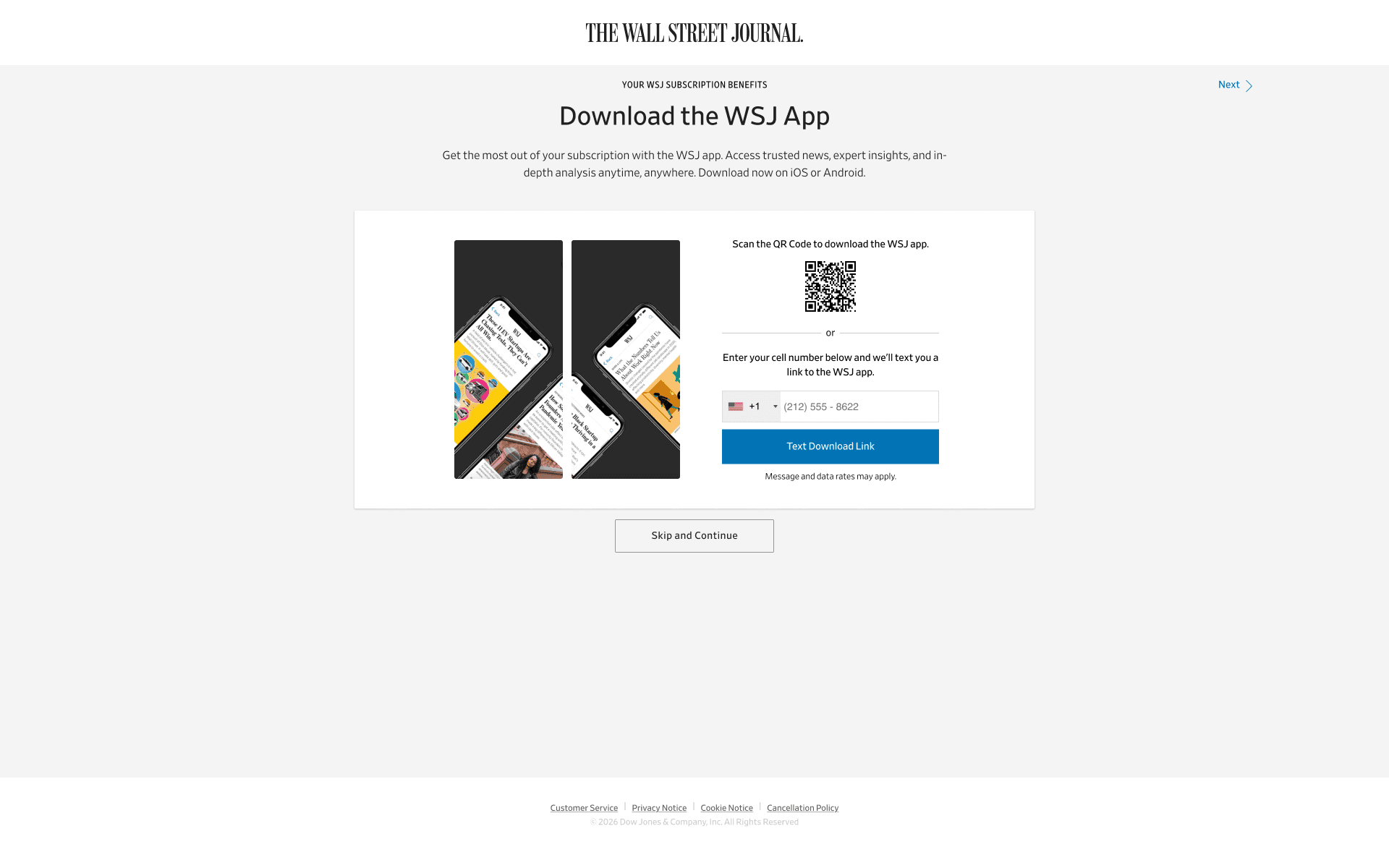
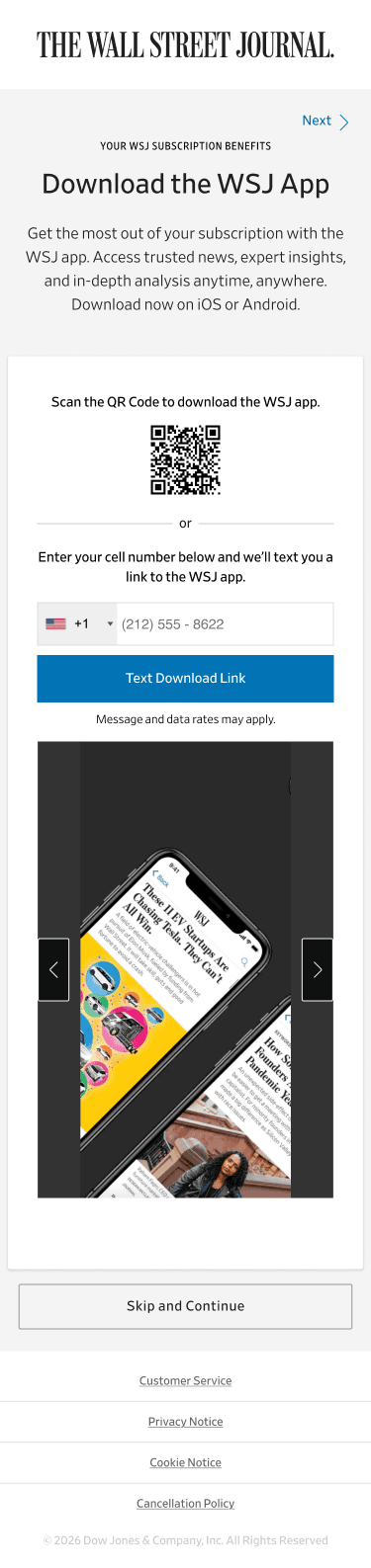
The flow opens by getting readers into the app, the surface where they engage most. Rather than a hard ask, it leads with value - the subscription benefits - and makes installing frictionless with a QR code to scan or a text-me-the-link option. A clear "Skip and Continue" keeps the reader in control and never blocks the path forward.
Step 2 - Personalize the experience
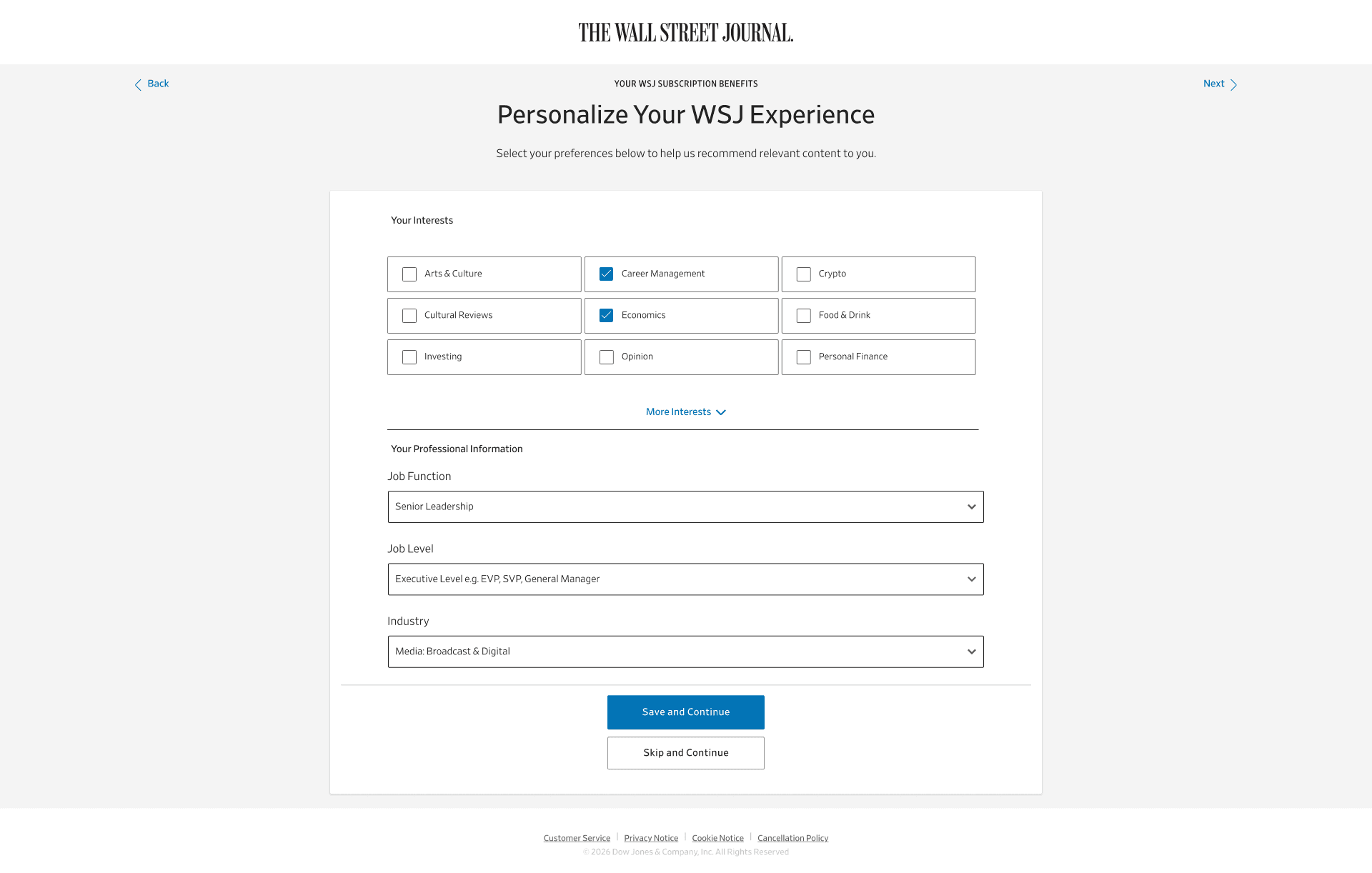
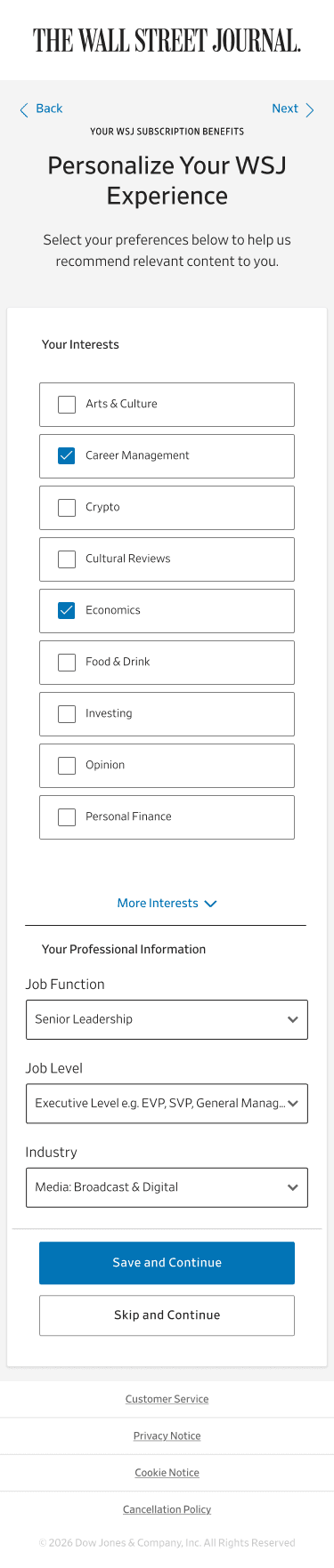
The personalization step is the heart of the sprint. Readers select interests (Economics, Investing, Career Management, Personal Finance and more) and optionally add a professional profile - job function, job level and industry. That single, low-effort screen is what lets WSJ move from one-size-fits-all to recommending coverage that fits each reader, and it feeds directly into the rest of the product.
Step 3 - Find the right newsletters
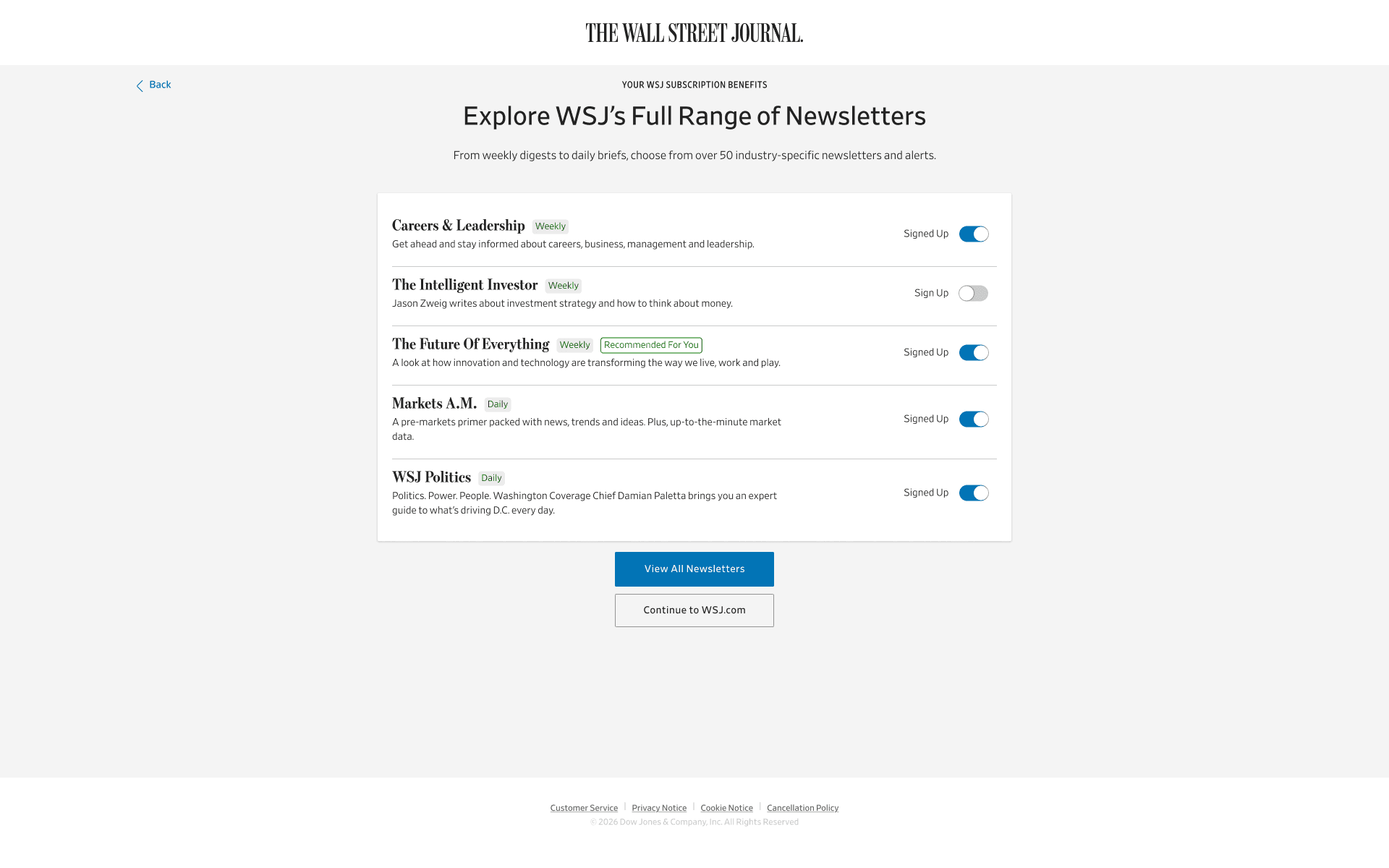
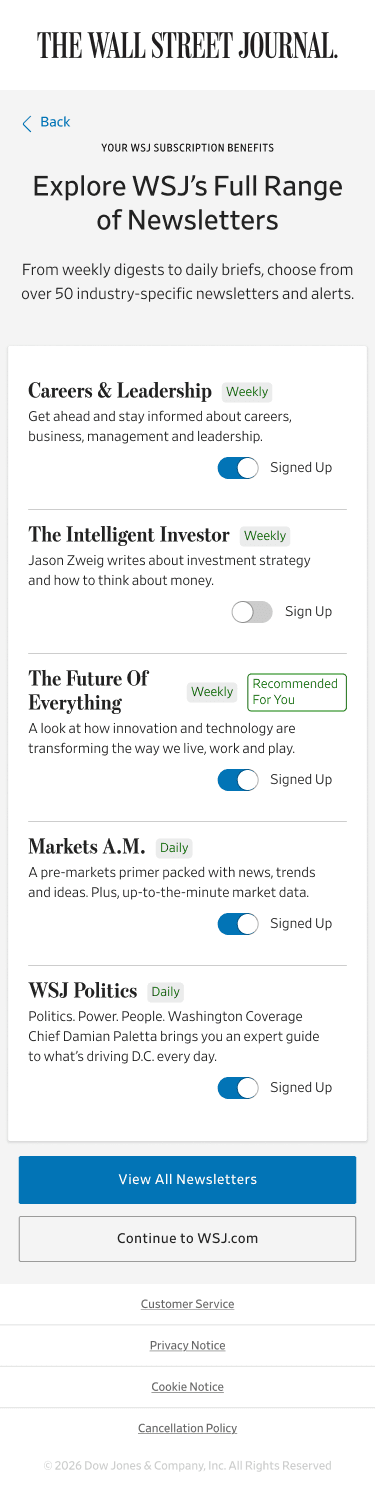
WSJ publishes over 50 newsletters, which is a strength only if readers can find the ones for them. The final step turns that catalog into a guided choice: each newsletter shows its cadence and a one-line description, the most relevant are tagged "Recommended For You" off the interests just captured, and signing up is a single toggle.
Outcome
A single, coherent onboarding that earns engagement instead of demanding data: it gets readers into the app, learns what each person cares about, and turns WSJ's catalog into a personalized starting point - all in three steps, fully responsive across web and app, and ready for production.
Onboarding is the one moment every subscriber sees. Designing it well is the highest-leverage personalization work in the product.
Next case study
WSJ Vertical Video
Read the case study →
Interested in how I approach personalization, AI, and systems at scale? Let's talk.