[ Case study ]
DHL IoT: Business Units
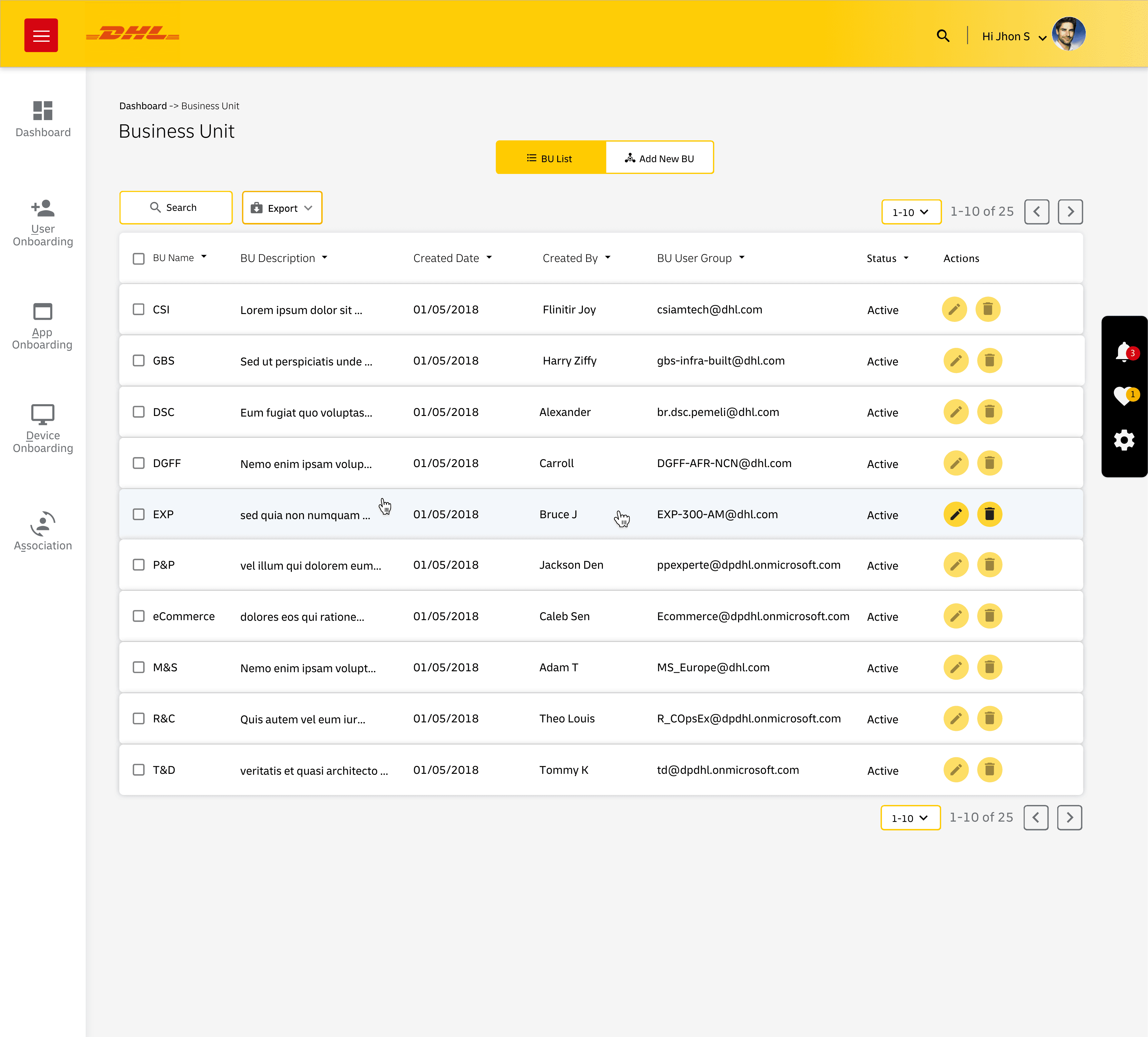
Modelling DHL's large, layered organisation on the IoT platform, the business-unit hierarchy that every user, device, and application is ultimately scoped to. Shown in both tree and horizontal views so administrators can navigate a deep structure the way the task suits, it includes flows to add a new entity and to assign customers and units within it.
- Client
- Deutsche Post DHL Group
- Role
- UX Architect · via Wipro
- Year
- 2019
- Disciplines
- Information Architecture, Enterprise UX, Data Visualization
[ Impact ]
Multi-tenant
Business-unit structure across the platform
[ Information architecture ]
Unit list
- All units
- Search
Unit detail
- Applications
- Devices
- Users
Hierarchy
- Parent / child
DHL is a large, layered organisation, and the platform has to mirror that. The business-units module models the organisational hierarchy that every user, device, and application is ultimately scoped to.
Structure you can see
The hierarchy is shown in both tree and horizontal views so administrators can navigate a deep structure the way that suits the task, with flows to add a new entity and assign customers and units within it.
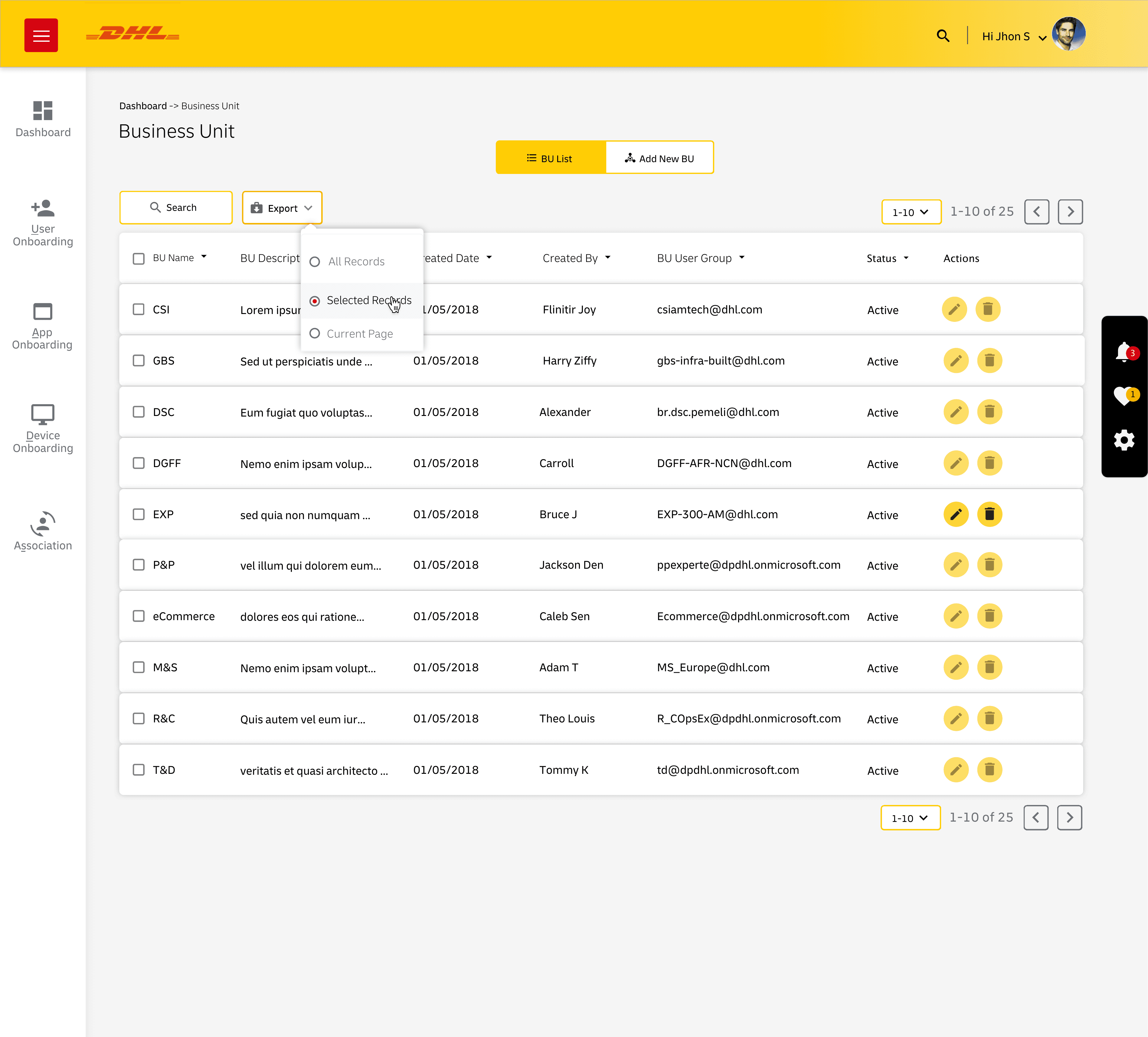
- Tree and horizontal views of a deep hierarchy
- Flows to add a new entity
- Assigning customers and units within the structure
Outcome
An organisational backbone that let every other module - users, devices, applications - be scoped correctly to DHL's real structure.