[ Case study ]
DHL IoT: User Onboarding
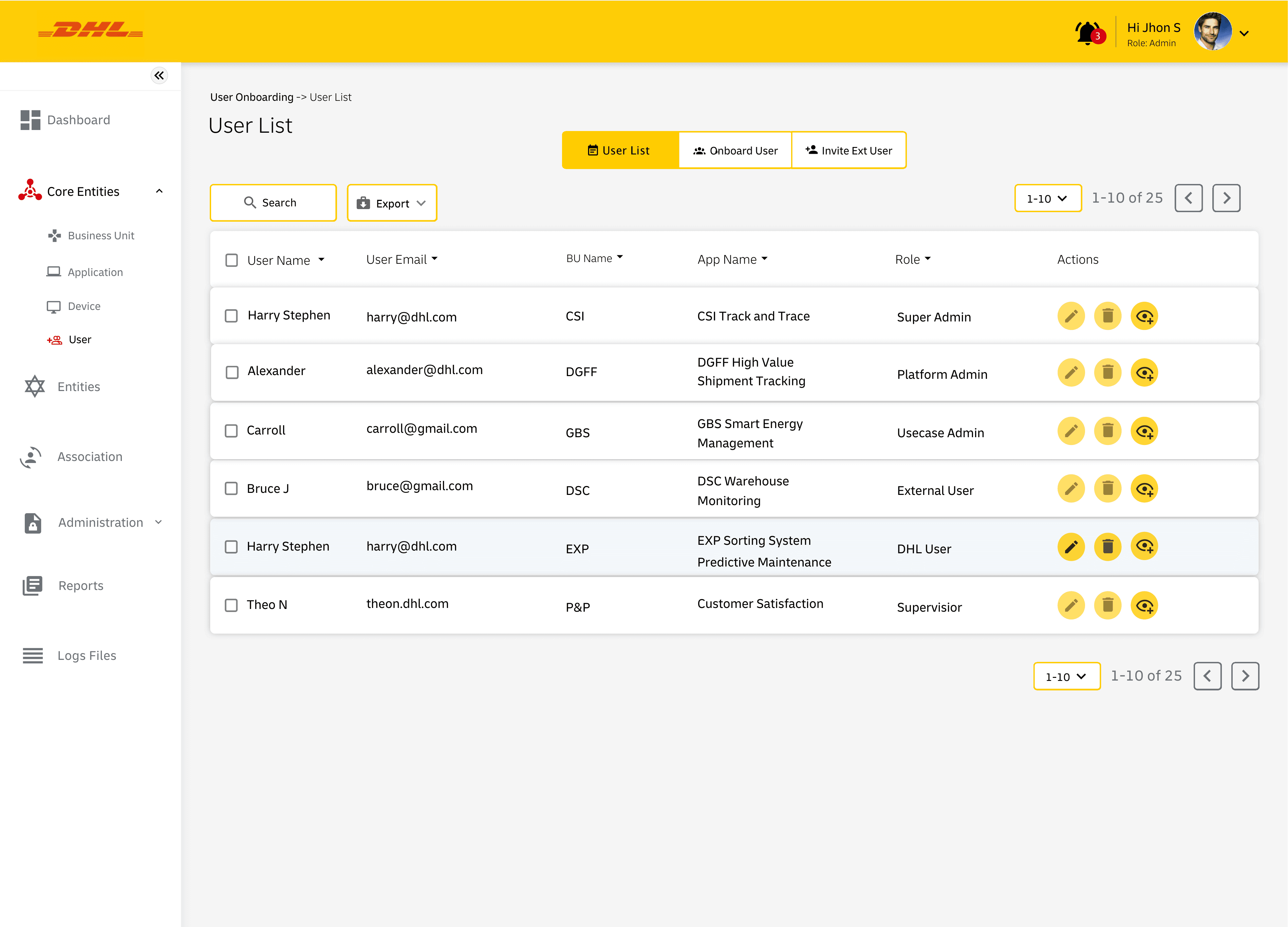
Provisioning people on the DHL IoT platform, where who can use the platform and what they can do begins. More than an invite, this is where the role-based access model is applied: the flow guides an administrator through identity, role, responsibilities, and business-unit assignment, so new users land correctly scoped from day one.
- Client
- Deutsche Post DHL Group
- Role
- UX Architect · via Wipro
- Year
- 2019
- Disciplines
- Enterprise UX, Interaction Design, Onboarding
[ Impact ]
Guided
Step-by-step user onboarding
[ Information architecture ]
Invite
- Link
Profile
- Identity
- Details
Role assignment
- Permissions
Access
- Activation
Who can use the platform, and what they can do, starts at user onboarding. This module provisions people - inviting them, assigning roles and responsibilities, and tying them to the business units they belong to.
People, roles, and units
Onboarding a user is more than an invite - it is where the role-based access model is applied. The flow guides an administrator through identity, role, responsibilities, and business-unit assignment so new users land with exactly the access they should have.
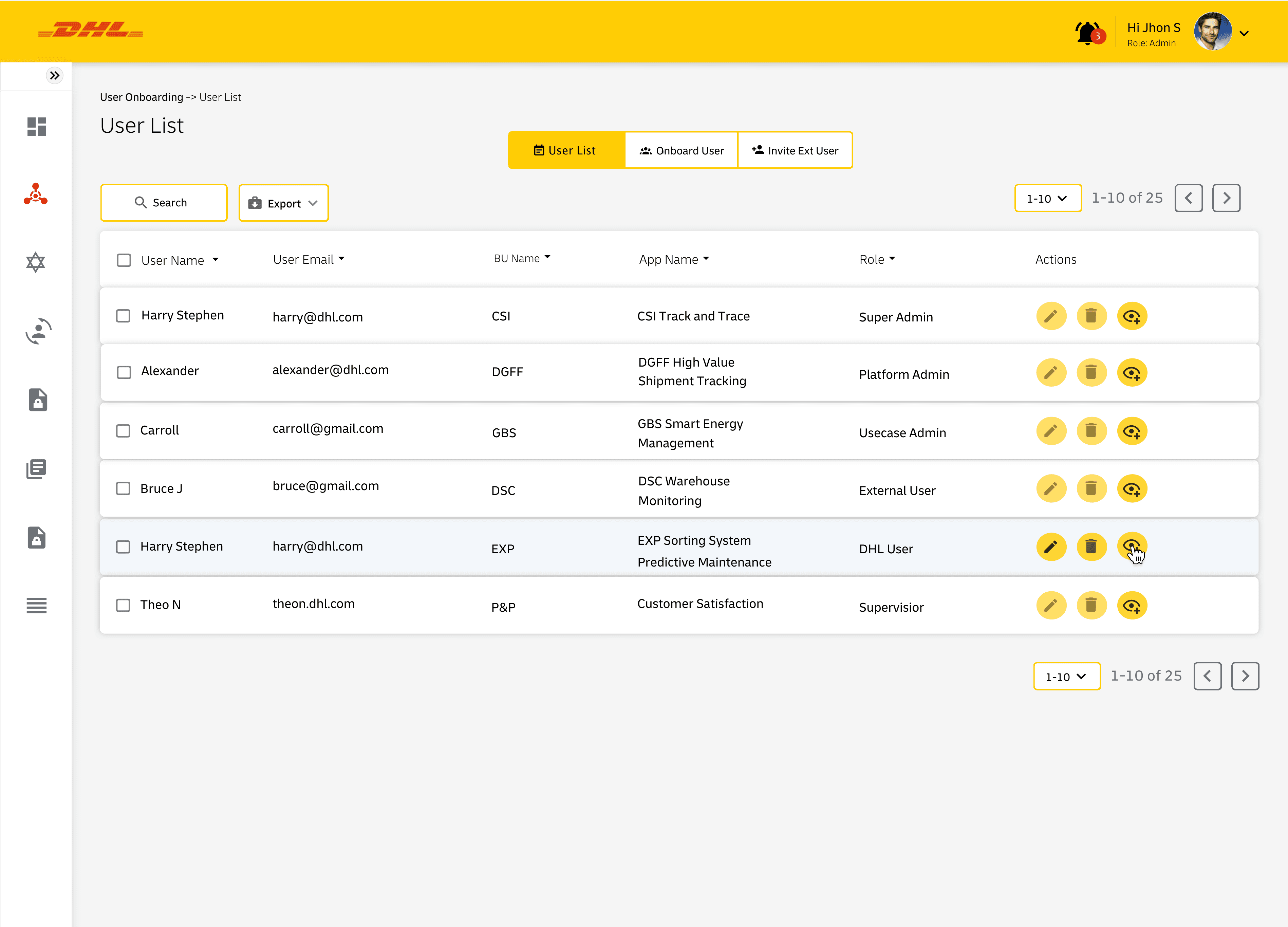
- Guided invite and provisioning flow
- Role and responsibility assignment up front
- Business-unit association built into onboarding
Outcome
New users reach the platform correctly scoped from day one, with governance applied at the moment of onboarding rather than after.