[ Case study ]
DPDHL IoT Platform
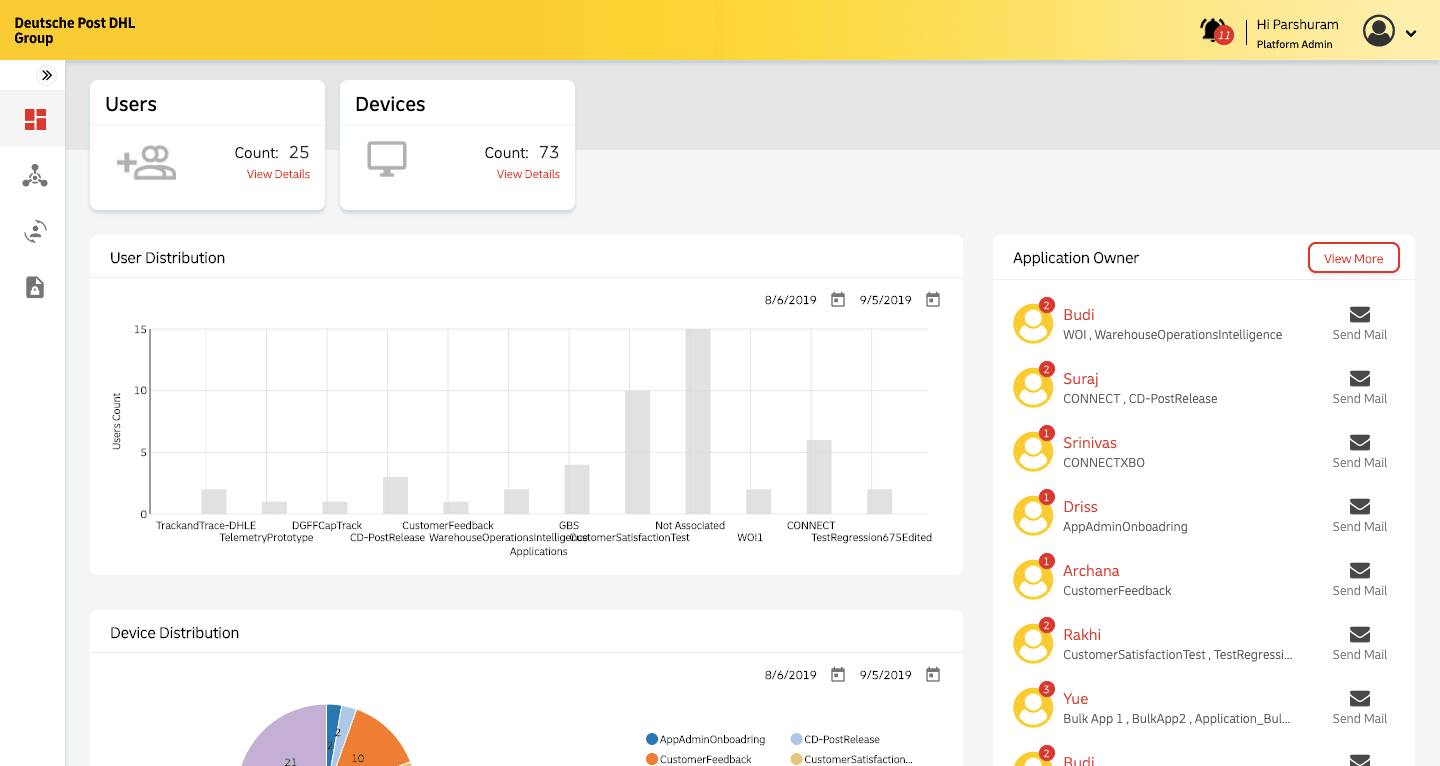
The Deutsche Post DHL Group IoT platform is one governed home for connected operations, where applications, devices, users, and business units are onboarded and run together rather than as a tool per use case. Its architecture rests on five core entities and a role-based access model, so the same platform serves many teams, from Warehouse Operations Intelligence to CONNECT, without fragmenting.
- Client
- Deutsche Post DHL Group
- Role
- Lead UX Architect · via Wipro
- Year
- 2019
- Disciplines
- Enterprise UX, Platform Design, Design Systems, Dashboard Design, IoT
[ Impact ]
5
Core entities: business unit, application, device, user, association
Many
IoT applications hosted, from WOI to CONNECT
RBAC
Role-based governance across the whole platform
[ Information architecture ]
Business units
- Tenancy
- Hierarchy
Applications
- Catalog
- Configuration
Devices
- Registry
- Telemetry
Users
- Profiles
- Roles
Associations
- Links between entities
The DPDHL IoT Platform is Deutsche Post DHL Group's home for connected operations - a single, governed place to onboard and run the IoT applications, devices, users, and business units behind DHL's use cases, from Warehouse Operations Intelligence to CONNECT. I led the UX architecture for the platform and its modules.
One platform, many applications
DHL was building IoT applications across the business, each with its own devices, owners, and users. Rather than a tool per use case, the platform provides one consistent home: applications are onboarded, devices registered and associated, users provisioned with roles, and everything monitored from shared dashboards.
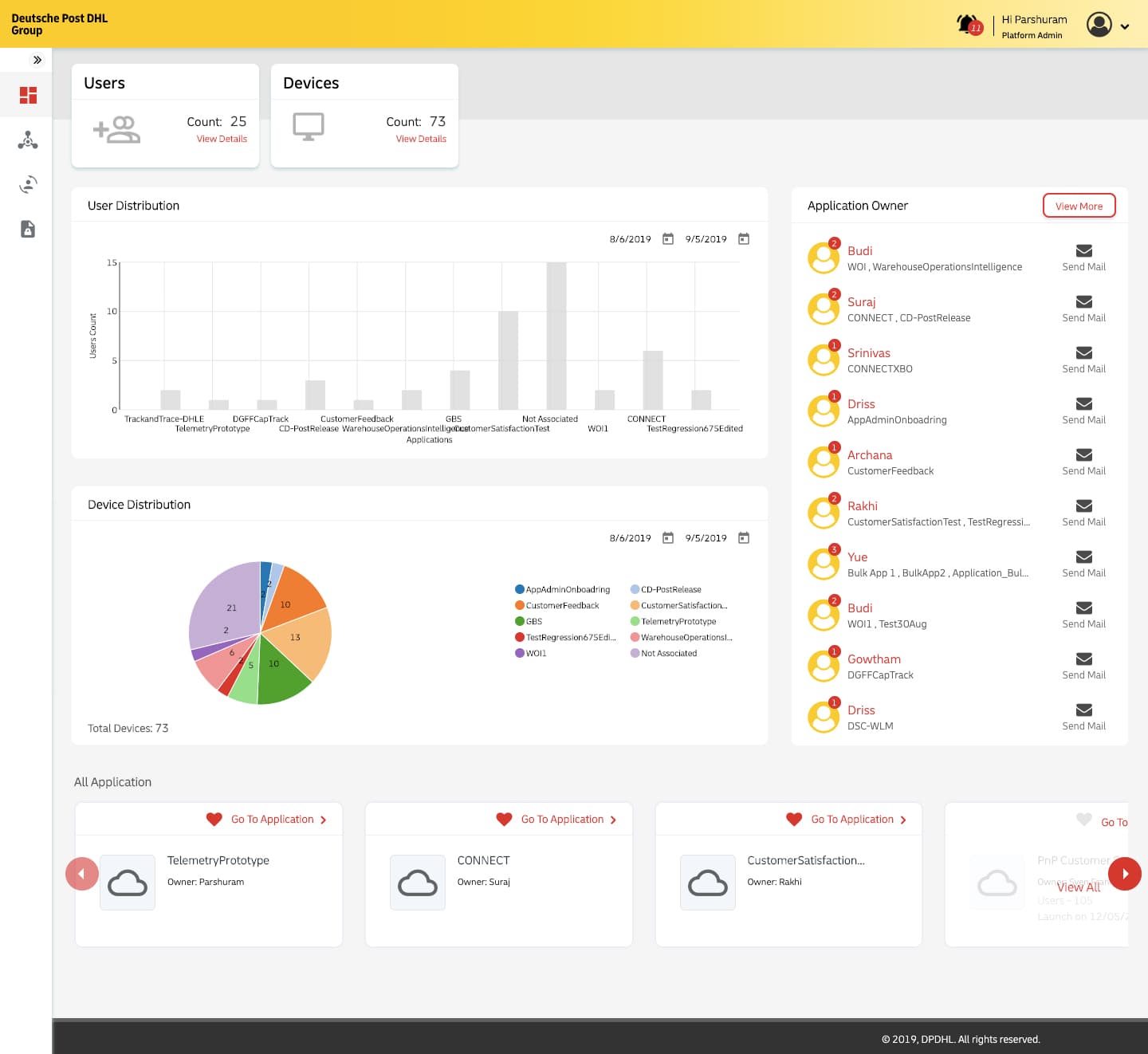
A model built on core entities
The information architecture is organised around five core entities - Business Unit, Application, Device, User, and Association - each with its own onboarding flow, all governed by a role-based access model. That structure is what lets the same platform serve many teams without fragmenting.
- Business Units model DHL's organisational hierarchy
- Applications are catalogued, owned, and launched from one place
- Devices are onboarded, configured, and associated with applications
- Users are provisioned with roles, responsibilities, and business units
- RBAC governs who can do what, per platform and per application
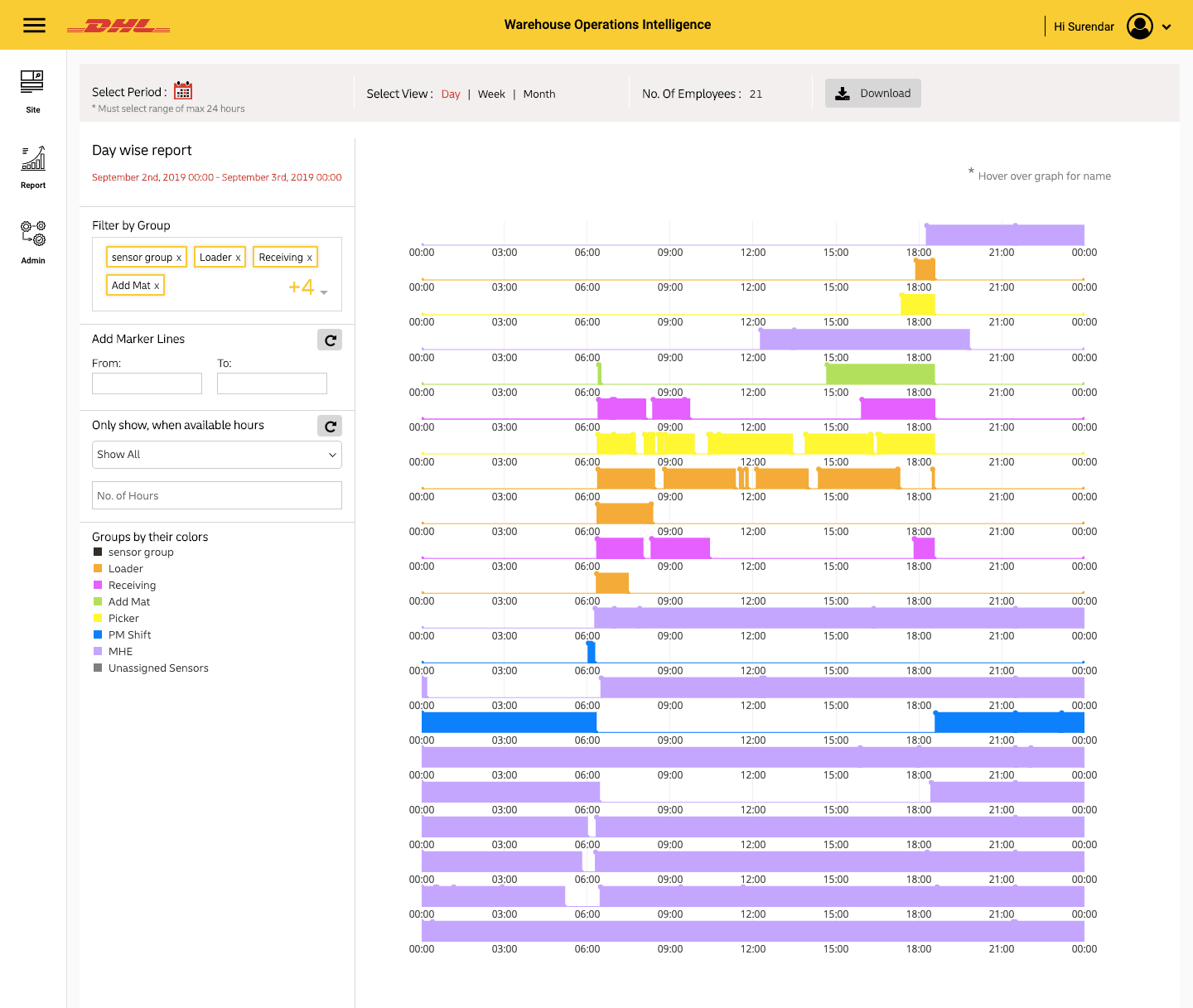
The hard part of an enterprise IoT platform is not any one screen - it is making onboarding, governance, and monitoring feel like one coherent system across every device, app, and team.
Outcome
- One governed platform replaced a tool-per-use-case sprawl
- Shared onboarding, dashboards, and a role model scaled across applications
- A consistent DHL design language unified every module