[ Case study ]
Seed: A Design System for Rolls-Royce Power Systems
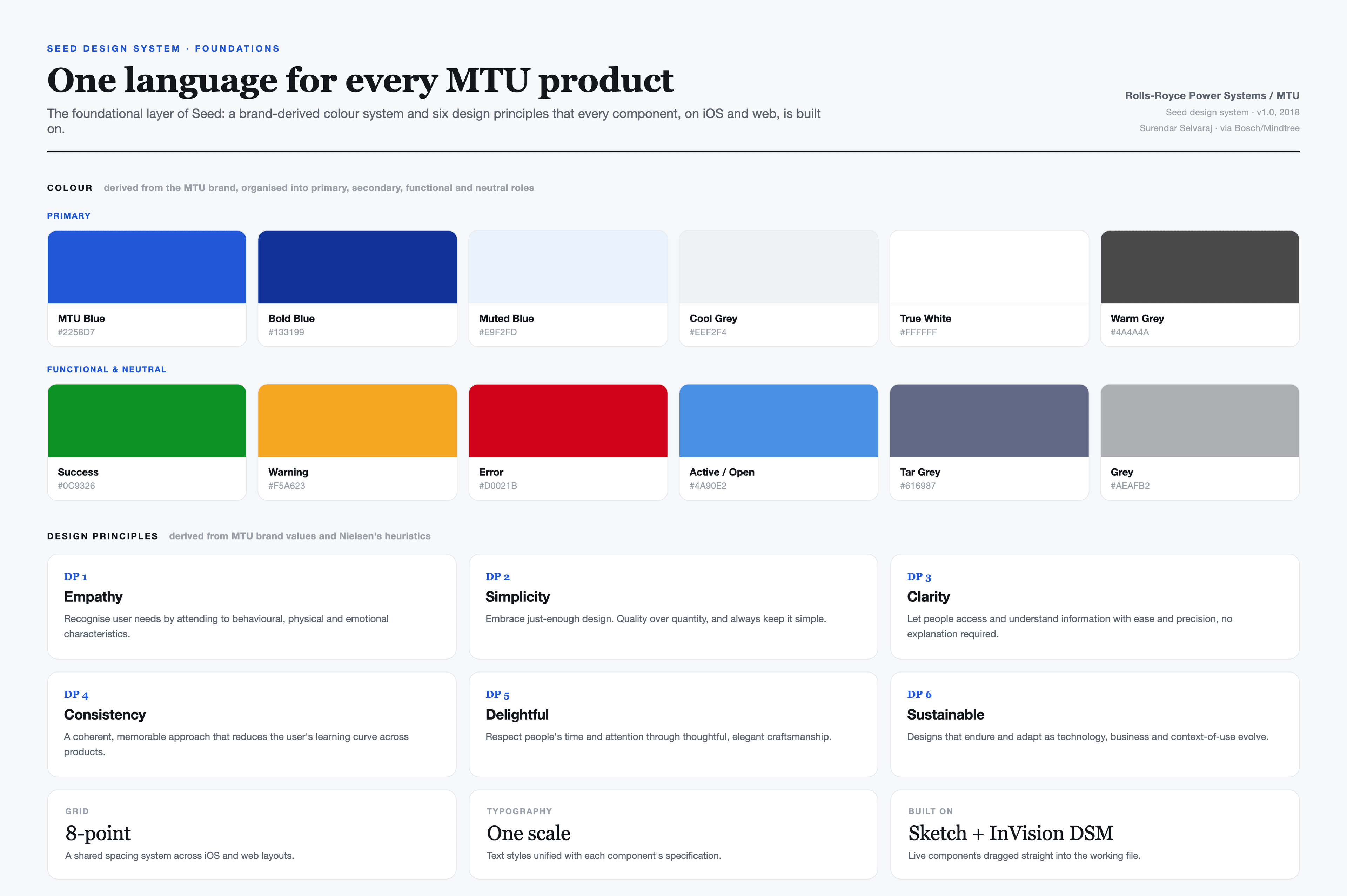
Seed is the design system for Rolls-Royce Power Systems / MTU: a brand-derived foundation, an iOS and web component library, and the operating model, D-gate reviews, versioned releases, and a dedicated core team, that runs it as a product, not a one-off project.
- Client
- Rolls-Royce Power Systems / MTU
- Role
- Design Systems Designer · via Bosch/Mindtree
- Year
- 2018
- Disciplines
- Design Systems, Enterprise UX, Design Ops, Component Libraries, Governance
[ Impact ]
iOS + Web
One component library across two platforms
6 principles
Brand-derived principles behind every decision
Run as a product
Core team, D-gate governance, versioned releases
[ Information architecture ]
Foundations
- Design principles
- Colour
- Typography
- Iconography
- 8-point grid
- Voice and tone
iOS components
- Buttons
- Headers
- List view
- Cards
- Status
- Tiles
- Tabs
- Pop-up
- Progress
Web components
- Headers and footers
- Cards
- Lists
- Tables
- Tabs
- Breadcrumbs
- Notification bubble
Operating model
- D-gate review
- Seed champ
- Versioning
- Design sprint
- Core team
- Design tokens API
Confidentiality notice
This work spans active platform strategy, shared AI capabilities, and multiple product surfaces. To respect that, this case study stays intentionally high-level, focusing on the cross-brand design problem, platform principles, and reusable outcomes rather than brand-specific implementation details.
Seed is the design system for Rolls-Royce Power Systems / MTU, delivered through Mindtree. It set one design language across MTU's digital products, a brand-derived foundation and a shared component library for iOS and web, and just as importantly, the operating model to keep it alive: reviews, versioning, training, and a dedicated team. As Nathan Curtis puts it, a design system is not a project, it is a product serving other products.
The challenge
MTU's teams were designing across many applications, on mobile and web, in different cities, with no shared language. The result was drift: inconsistent components, redundant work, and a widening gap between design and development. The brief was a design system, but the deeper task was to build something that would not rot the moment the first sprint ended.
- Set one design language across iOS and web for MTU's products
- Turn scattered, redundant UI work into a reusable component library
- Build the governance to keep the system maintained as a product
[ Protected layer ]
The full case study is available on request.
High-fidelity screens, information architecture and the detailed process for this enterprise project are shared under NDA. Enter the access password, or request access and I will share the full walkthrough.